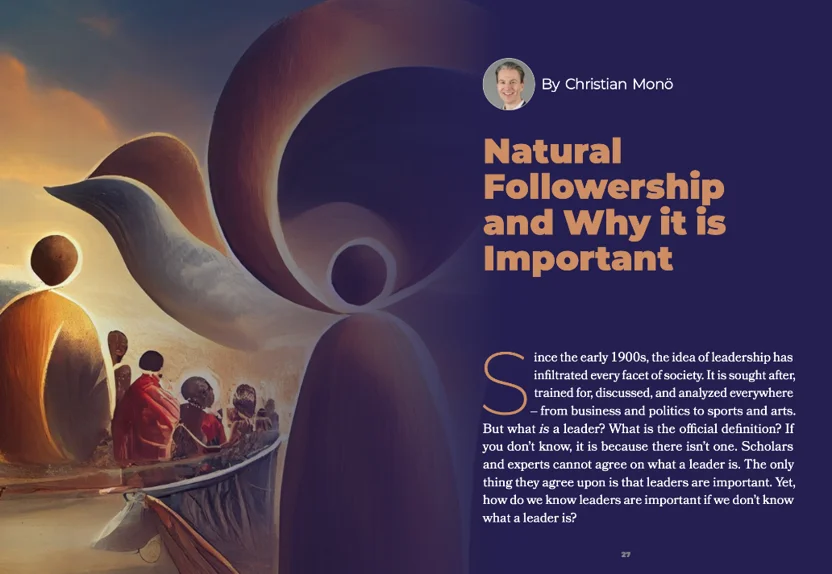
Discover natural followership
There are no leaders without followers
Despite this, we pour all our attention into leadership. People spend years learning how to lead, but not a single day learning how to follow. Companies spend billions on leadership development, but not a penny on followership. And without any real understanding of followership, how do we know leaders are the key to success?
Natural vs. constructed leadership and followership
There are two forms of leadership and followership to keep track of: the natural and the constructed.
Constructed leadership and followership is the kind we’re most familiar with. Someone is appointed manager and expected to act as leader; those below them are expected to follow. The roles are assigned formally, and they usually form the backbone of the organization’s structure.
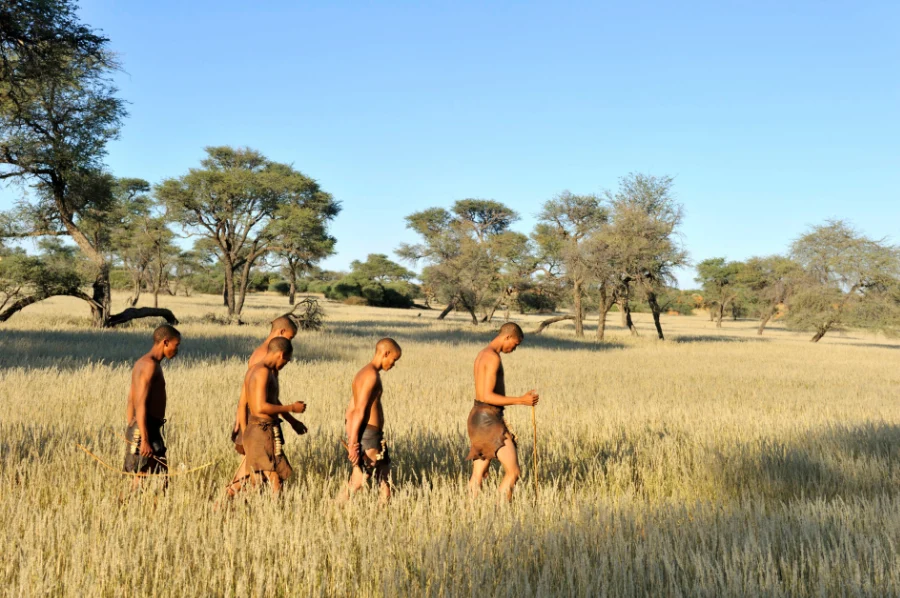
Natural leadership and followership is something else entirely. It rests on a deeply rooted behaviour that seems to have been central to human beings for as long as we’ve existed. Here, no one formally directs the group. Just the opposite — the group follows whoever is best suited, at that moment, to guide it forward. Typically, when the task or challenge changes, so does the leader.
This is how humans have solved problems for hundreds of thousands of years: by letting leadership shift according to what the situation demands. It is one of our oldest collaborative tools, and we still use it to handle everything from everyday tasks to large and complex challenges.
Why great collaboration starts with natural followership
Many experts, managers, and politicians like to talk about the importance of “strong” leadership. But leadership is a means to an end. So what is it we actually want to achieve with “strong” leadership? And is it possible that leadership development isn’t the best way to get there?
Many organizations I’ve talked to say they invest in leadership to improve collaboration. If that’s the goal, it would make more sense to focus on natural leadership and followership.
Imagine a team facing a difficult task. The better they draw on one another’s knowledge and experience, the greater their chances of solving it. With natural leadership and followership, the group can engage in what I call collaborationship.
The term “collaboration” refers to the act of working with someone to produce something. This can take many different forms. But collaborationship is different: it arises only when people share a common goal and use their differences to reach it. That is our greatest superpower.
Why learn more about natural leadership and followership?
Many organizations work against collaborationship without knowing it. They focus on leadership and build their structures around it. As a result, they risk building teams whose collective strength is never encouraged or realized.
Once we understand how natural leadership and followership works, we can start building organizations that tap into our greatest strength: collaborationship. Step by step, we move closer to an organization where more people pull in the same direction, and where each person’s strengths become an asset.
Further reading
Want to read more? Below you’ll find articles, resources, and more about the book Why We Follow.
Why we follow
“A supremely engaging book that will come to be considered seminal in the field.”
— Ira Chaleff
“A modern retelling of The Emperor’s New Clothes as it pertains to the leadership industry.”
—Marc and Samantha Hurwitz
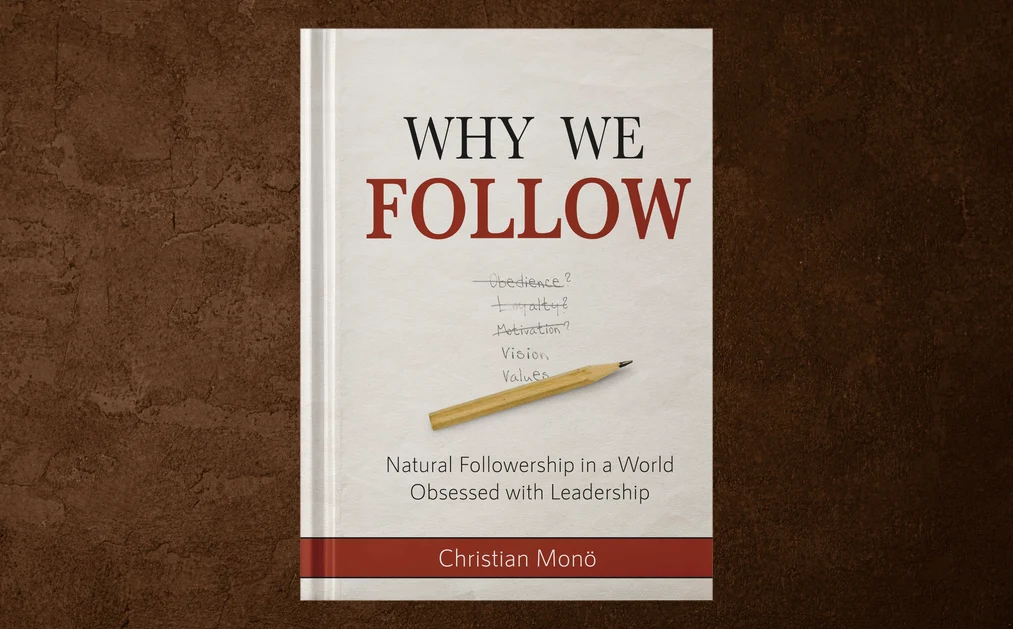
In Why We Follow, followership expert Christian Monö flips traditional leadership thinking on its head. Drawing on research and real-world examples, he reveals how leader-focused mindsets hold us back. They stifle innovation, block collaboration, and even threaten democracy.
At the heart of this thought-provoking book is “natural followership”, a new concept that redefines what it means to lead and follow.
Whether you’re a part of a team, managing a company, or hoping to spark a movement, Why We Follow will offer new and inspiring insights. Let natural followership guide you in today’s fast-changing, interconnected world.